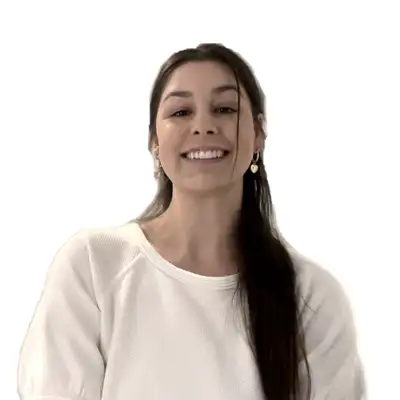
Founder + Funder: Anabel González, Founder of Good Bacteria and Hayden Williams, Partner of BrandProject
Hayden Williams
If there's one thing at any stage that you as a founder want to convey is a sense of inevitability for what you're doing. And that whether or not this investor who you're talking to, they can get on the train or not get on, but it's leaving the station. And so if you ever feel like as the investor, if I don't say yes, they're at a standstill, things are not moving forward. As a founder, every interaction you have with investor, hopefully things have been moved forward and you get the feeling that this is going, this is, this train is leaving the station and whether I invest or not. So I better move quickly because those founders who are able to raise when there's that sense of inevitability about what they're doing.
00:50
Hannah Dittman
Hey everybody, I'm Hannah Dittman, operations and finance host of the Startup CPG podcast and today I'm excited to be joined by Anabel González, founder of Good Bacteria and Hayden Williams from Brand Project for a founder and funder episode. Good Bacteria is the first rotating probiotic system delivering a new blend of prebiotics, probiotics and a postbiotic each week. It's Dr. Formulated to support digestion, reduce bloating and strengthen whole body resilience. It's a really thoughtful next gen approach to gut health that actually fits into your daily routine and definitely one to try for yourself a simple supplement for optimal gut health without the work and complexity of over managing your diet. I'm a huge fan. Sign me up. On the investor side. Brand Project is an early stage consumer fund partnering with founders building standout consumer first brands.
01:44
Hannah Dittman
They invest early and bring a hands on approach across product, brand and growth, showing up as true partners to help companies scale into enduring businesses. Hayden deeply understands the founder journey because he's been there himself. In this episode we break down the full investment story of Good Bacteria. What stood out early, how conviction was built through diligence and what both sides were looking for in a partner. We also get into what the founder funder relationship actually looks like in practice and you'll even hear it for yourself on the episode. We chat lessons learned throughout fundraising and tactical advice for founders navigating the process. Today, Hayden and Anabel keep it candid, practical and super founder friendly. So enjoy. Hey everybody. Welcome back to the Startup CPG podcast.
02:35
Hannah Dittman
This is Hannah and today I'm here with Hayden Williams from Brand Project and Anabel González from Good Bacteria for our first ever founder and funder episode. Hayden and Anabel, welcome to the show.
02:47
Anabel González
Thank you. Happy to be here.
02:49
Hayden Williams
Thank you.
02:50
Anabel González
Yeah.
02:50
Hannah Dittman
We're so excited to learn more about the story of how you all came together and get a peek behind the curtain of what the investment process was really like. First, I'd love to dive into a little bit of your individual backgrounds and the journey that led you where you are today. Anabel, I'm happy to start with you.
03:09
Anabel González
Sure. So my background is in design. I'm actually in New York City right now. This is where I studied. I went to Parsons and studied integrated design. And along the way I had a now four year old. And after I had my son, I had a pretty severe experience healing from postpartum, which led me to a integrative health coaching program. And I started learning about gut health and diversity in the gut and realized that I was inspired to create a product targeting diversity in the gut. And I reached out to a Johns Hopkins doctor. I pitched her on the idea of a product targeting diversity in the gut. That was almost three years ago. And here we are today with one of our best investors, Hayden Williams.
03:53
Hannah Dittman
Great. Thanks so much. Hayden, what about you?
03:56
Hayden Williams
Yes. So I'm based in New York City. I started out my career investment banking, did that for three and a half years, and then I quit to start a company in consumer tech, which I bootstrapped and ran with my best friend for just under four years. And then I transitioned into venture at a fund called BBG Ventures were invested in consumer companies, largely consumer, all of at least one female founder. I was there for about three and a half years. And then I've been at Brand Project now for just over seven years, investing in early stage consumer companies. And happy to go more into what we do later. But yeah, excited to be here.
04:30
Hannah Dittman
I'll grab it right now. Let's dive into Brand Project.
04:34
Hayden Williams
Yes. So Brand Project was founded in 2013 and most of the team is based in Toronto. As I mentioned, I'm here in New York City. And all that we've ever done since 2013 is invest in early stage consumer companies. That could be consumer product, consumer service, or consumer technology companies. Everything's consumer facing pre seed and seed, nothing's too early for us. The majority of our investments are pre launch, as was the case with good bacteria. And broadest range of check size would be 500,000 to 3 million, with 1 to 2 million being kind of our sweet spot. And I guess what's different about us and our team is the amount of time that we spend working with our portfolio companies. So we only invest in a couple companies every year. And when we Invest.
05:15
Hayden Williams
We love to work alongside founders kind of as extensions of their team, just leaning in anywhere that we can. And so it's been a lot of fun working with Anabel, who we met September 2024.
05:27
Hannah Dittman
Awesome. And Hayden's a pro. We got the background down. Hayden's been on another episode of our podcast, so definitely check that one out if you want to get even greater. Deep dive into brand project and what he's working on over there. Anabel, I'd love to kind of get your brand overview. I know you've alluded to your story of how you got there, but would love to learn more about what exactly good bacteria is and what you all have built.
05:51
Anabel González
Yeah. So when I was healing from my postpartum journey and started learning about the gut lining. So basically, you have this very thin gut lining in your body that determines what kind of nutrients you absorb into your blood and what kind of toxins you block out. So you can imagine that's dictating your whole body health overall. It affects your immunity, your skin, your digestion. And on this healing journey, I felt really inspired by the fact that we have more microbes in our bodies than human cells. And when you feed that gut lining with diversity, different colors, different foods, different microbes and bacteria, over time, you can build up that resilience, which is going to give you better health across the board.
06:30
Anabel González
And so I realized that we should be consuming a wide variety of microbes, like in nature, in our soil and in our foods, and started to ferment my own foods and really saw the effects of starting to feed my microbes. I also found crazy Reddit threads and heard that clinicians were recommending switching up probiotics and that you shouldn't be taking the same bacteria over and over, because that can create dysbiosis in the gut. Basically. Very few dominating strains can take over your whole gut ecosystem, and you have trillions of microbes, and they all play collective roles, so you want to feed all of them. That's one of the reasons why fermented foods are so powerful. And so I knew that I wanted to create a supplement version of fermented foods. And I kind of had this moment of, aha.
07:13
Anabel González
I think it was like my design brain was like, wait a second. This is a really big market and it's a massive problem. And so if diversity is the strongest indicator of a healthy gut, why isn't there a single probiotic on the market targeting diversity? And decided that I wanted to find a doctor to work with on that specific mission. And I found Dr. Lee Frame, she's a Johns Hopkins doctor. I saw a video of her being interviewed on YouTube and I cold reached out to her on LinkedIn and I said, look, I'm a background in design, I'm a mom, I have this idea and this is the vision for it. Can we chat? And she said yes. And she agreed to start good bacteria with me.
07:52
Anabel González
And so we created this product that is a rotating probiotic system to expose your body to different microbes over time to build up that resilience in the gut over time. So it has pre, pro and postbiotics. We have five different clinically studied, clinically backed probiotics in each week and it's designed to be cycled.
08:12
Hannah Dittman
So unique and smart. Hallelujah to the cold reach out. Always interesting to hear how people come together and I think shows a lot about how you operate as a person and the way that you kind of are risk on. I'd love to also kind of understand what the company story was like from founding to getting investment. You mentioned that maybe you guys had gotten in touch pre revenue or pre launch. What was kind of the flow from the fundraising and the capital side of your journey and the product development and launch side of your journey. And at what point did you realize, oh, I need to go get investment. And how did that all unfold?
08:48
Anabel González
Well, you mentioned a cold reach out. So I love a cold reach out. And I feel like half of the battle is just believing that you can and just showing up every day relentlessly reaching out to people that you might think this person's not going to answer me. Doesn't matter. Reach out to them. Anyway, after we decided to work together, Dr. Frame and I, we fun fact, I don't think many people know this good bacteria was originally a beverage. And so the idea is that we would create a science backed beverage to be answer to the likes of different probiotic soda companies that were making gut health claims but didn't have like the rigorous science backing, if that makes sense. So that was the first product form. I met Hayden right at the tail end of that.
09:29
Anabel González
I pitched him on this science backed beverage. He agreed with his team to take a second call and then within that window of like a week, we had pivoted to the rotating probiotic system. Before that I sent. I know this because I tracked all of them on an excel sheet. Over 200 outreaches to investors, different angel investors, VCs, just like constantly cold outreaching. And I found this food tech investor in Amsterdam. She was angel investor I pitched her on good bacteria. She said, I'm not doing investments right now, but I know this early stage fund. They're called Brand Project. Let me introduce you. And so, yeah, the rest is history.
10:09
Hannah Dittman
Wow. Yeah, I mean, I think 200 makes sense. I feel like we hear that all the time. It's just. It's crazy. Kind of the length sometimes you have to go through in the fundraising outreach journey to find the right people and get in touch. And I think that's awesome about the referral. And I think it never hurts to ask, especially at the end of a meeting, if something isn't going to work out for feedback or for help outside of fundraising even. I feel like in cpg, it's such a community village effort. Obviously, with startup cpg, we know that, and I think so many positive things come from just putting yourself out there and hustling and having the conversations and doing the thing.
10:47
Anabel González
I just want to add Hannah, by the way, the Slack startup CPG was one of the first resources that I found. So this is a very full C. My current COO and I met years ago and she sent your Slack to me today. I just saw her and she was like, oh, my God, what a full circle moment. So love what you guys are doing.
11:05
Hannah Dittman
Yay, you made it. I love that you made it to the startup CBG top. Awesome. I love to hear people getting good value out about the community and the things that we're doing that you're a member in your inner ecosystem. Hayden, what was the initial pitch like and what was really compelling to you about the brand?
11:24
Hayden Williams
Yeah, so I think most early stage investors would say it starts with the founder and their founding story, but that's especially true for a prelaunch business, as good bacteria was when there's not much else to evaluate. And there's really nothing better than a founder who's on a mission to solve a problem that they faced. And that's Anabel. She is a missionary. She is on a warpath to help people find solutions that it took her longer than she would have liked to find herself. So that's the start, middle and end of what got us excited. But also, as we got to know Anabel and what she was building and what we believe then and certainly still believe now, is that good bacteria is really the right product for kind of where consumers are right now.
12:06
Hayden Williams
People increasingly know about the importance of gut health, the importance of diversity. That's really what makes your microbiome resilient. And also we love the fact that it's all Inspired by whole food. And we also admit that's where the consumers are going of not things that are manufactured in the lab, but mimicking whole food as best as you can. And so as Anabel educated us, as all the best founders do, of teaching us about something we may know very little about, just about the science behind the rotational nature of the product, were all in.
12:35
Hayden Williams
And then in addition to being backed by science, even at that point in September, which was ended up being a year before launch, the branding was so beautiful and Anabel had such a point of view on every part of it that we just couldn't help but say, let's do this.
12:51
Hannah Dittman
And what was the diligence process like? Are the pillars of diligence? Obviously, a lot of this had to have been Q and A and conversation based, given things were early. What types of questions were you asking Anabel? And what was kind of the process of really gaining conviction and confidence that what you were seeing was going to come to fruition in the right way?
13:13
Hayden Williams
Yeah, sure. So one main thing is just validating. Is there real science behind this? I mean, it sounded reasonable, but what would the clinician say? And it turns out that there, yes, there was tons of rationale. I was just looking around and reading prominent people in the space and there were direct quotes from all these scientists and researchers saying, yes, probiotic supplements are great. We just recommend that you rotate, just buy from different companies. And they wouldn't prescribe which companies to buy from. They just say, just rotate every so often. Because if you take the same thing over and over again, it's not that it's bad for you, it's just less good. You kind of plateau direct quotes from doctors saying like, you want more good bacteria. And it's almost like as if Andrew had placed these quotes for us to read.
13:55
Hayden Williams
Great branding and stuff about people saying, yeah, just rotate. And so the way that people had to do that before good bacteria is just buy from different companies every so often. So then once we kind of got comfortable with that clinical rationale, then obviously the next question is, do we think mainstream consumers would actually buy it? And I think as I thought about good bacteria, one of the things that was amazing about good bacteria is that it's both innovative but also intuitive. And those two things don't always go together. Where a lot of innovative products, regardless, in the category, might really require some consumer education. And that can be expensive and slow. Whereas here is a case where I had never thought about rotating my probiotics, but the second that Anabel mentioned it Made perfect sense.
14:43
Hayden Williams
And I'm just a normal person who listens to some podcasts sometimes. I had never thought about rotating my probiotics. She said it. I immediately understood. That makes sense. I wonder why no one else is doing it. And we kind of felt like, we bet other consumers will have that same feeling. And so that combined with the fact that Anabel had this beautiful brand and to the point of Anabel is the queen of icefold emails. And they are personal. It's not just a volume. There's a heavy volume, but they're all personalizing. I'll never forget there was some influencer that Anabel had reached out to who someone on our team actually had a relationship with. And he had asked her, like, oh, I hear you're talking to Anabel. And she was like, you wouldn't imagine the volume of people who reach out to me.
15:24
Hayden Williams
I've literally never responded to a cold email. Anabel was the first one because she had sent a personalized email about why she was interested in chatting with her. And so this woman took the conversation. I think the anwor has just replicated that over and over again, whether looking for investors or hiring or looking for partners. And that's a great sign because I think the job of a founder CEO is sales in every way. Again, to raise money to hire people to find partners. And so just seeing that while getting to know Anabel and seeing how many times that she was doing that, there's real momentum just in the months that were getting to know her was all. Which got us really excited to invest.
16:01
Hannah Dittman
Yeah, that's such a great learning. And drop the template sometime. Anabel, I'm sure everyone would love to know what your emails are like.
16:08
Anabel González
You know what, Hannah? It's my grandma. She was the CEO of a publicly traded commercial real estate company, but started back in the day when women were like secretaries. And she was a complete powerhouse. And she raised me and always shared that everyone wears an invisible sign around their necks that says make feel important. And it is just so true. And I feel like just from a product standpoint, building community, investor outreach, like all of that, I feel like that was always at the core of all of it. And yeah, just love her so much, obviously.
16:39
Hayden Williams
Aw.
16:40
Hannah Dittman
That's so inspirational. And yeah, I feel like it makes a ton of sense. Like people, especially in consumer. I mean, how you treat people is such a reflection on how you might treat your consumers. And the passion that you have and the authenticity of that you have for what you're doing that's so important in CPG like it's so easy to just buy a stock product and slap a label on it and call it a day and go try to make a bunch of money.
17:04
Hannah Dittman
But when you are kind of betting on someone really being able to build a strong relationship with their consumers or a consumer base that is really passionate about the brand and the products and what is going on behind the curtain and all of those things, being able to showcase that in little ways, I'm sure helps build that confidence level and shows what your mental approach to those dynamics typically are. Anabel, what was the goal with finding an investment partner? Obviously launching, probably, but what milestones were you working towards at the time and what was really the need that fueled you being ready to do that?
17:45
Anabel González
Yeah, so I knew that the type of product that were creating and wanted to build and the brand universe that we wanted to get out there into the world wouldn't be feasible from starting at the farmer's market kind of standpoint, which is like incredible and amazing for many products, but just for our particular product that I knew that we needed to be venture backed. I also knew that I wanted to work with some of the best investors in the space. So I was looking at other brands. For example, Brand Project has our place and their portfolio company great many like some other really incredible companies. And I knew that I wanted to, you know, you are who you surround yourself with. And I knew that we wanted to make it to like the top of the CPG totem pole.
18:26
Anabel González
So I was on a mission to find investors with the best portfolio. But also, I think a big part of it is intuitive, like these are humans that you're going to work with for a very, very long time. And so I have a commitment to good bacteria and my team and my product, of course, but I have a commitment to our investors. And this is like a very long term dynamic relationship that you're starting with a group of people, in some cases with an individual. And so it was really important for me to make that decision instinctually as well. And I just really clicked with Hayden first and then really loved the whole Brand Project team. Also, I'm a big proponent of like female entrepreneurship. And they all had daughters. Yeah, they just like, so are advocates for female entrepreneurs.
19:14
Anabel González
And that was something that in a room of, no offense, Hayden, but men in suits, as I like to call it was really refreshing for them to be so excited to work with a female entrepreneur. So those are a few of the reasons that I felt excited about them.
19:28
Hannah Dittman
There's so much dialogue that typically happens about how the dynamic between an investor, portfolio, company or founder should feel just a vibe or like a good culture fit. Like when you're making a hire, like it's a good culture fit, you kind of have that puzzle piece that you're looking for and I think it can't be discounted or overrated. Like making sure that you feel confident that you're going to be empowered to go do the crazy things that you need to do to make an investment successful. That's a real thing. Like so much of business is a mental game, you know, it's not like we're all in some crazy forensic technology based thing where it's black and white and we're figuring all this out. The reason you're betting on a founder is because so much of it is creative problem solving and hustle and ideas.
20:22
Hannah Dittman
And it makes a lot of sense that you want to be holding hands with someone that you feel it's really got your back and excited for you to go do that. So that's very thoughtful and very sweet to hear about the brand project team, both of you. Where do you see Good Bacteria going? Obviously when you go into an investment, you kind of have an end goal in mind as an investor or where you think the company might go. So what's on the horizon for Good Bacteria and what's the big dream and goal with the brand?
20:52
Anabel González
Yeah, so I think early days we landed on the name Good Bacteria because we unlocked that you have more microbes in your body than human cells. And so Good Bacteria is not a trend. Gut health is not a trend. It's not going anywhere. So we feel really lit up and excited to own the space of bacteria, specifically across different formats. So a second product coming out in June, a third product coming out end of the year, and then a fourth product coming in the early spring. They're all in the biome space, but our fourth product actually extends into another part of, you may say like the retail shelf. So we feel really excited to continue to innovate in the space, to continue to create modular approaches to the gut microbiome.
21:37
Anabel González
So finding the middle ground between this one stop shop, one size fits all supplement, but also the more customized approach to testing your gut microbiome and coming up with really custom solutions. The science is not quite there yet. So we feel really excited to build in the in between of that space for now and also stay close to the science as it continues to develop. And I think that from a brand universe perspective, we feel really Excited to continue to build a brand that is vibrant and curious. There's a landscape of like needing to fix your body or clean up your gut. And we feel really excited about reconnecting to your body, to nature, to its natural rhythms. So excited to keep building in that space.
22:20
Hannah Dittman
Hayden, what about you?
22:21
Hayden Williams
Yeah, it's Anabel's building a master brand. And that's the stuff that we spend most of our time in, health and wellness, whether it's products or service or technology. And what Anabel's building is a master brand. Anabel said she follows the science and because of the community that she's building and everything is so consistent. The brand voice, how they talk to consumers is all about solving problems, not making them feel ashamed of anything, but leading with education and compassion and just helping people be healthier, both through very accessible means. And so I think there's so many places where Anabel and the team will take that and it really is just building this master brand and good bacteria. Just.
23:03
Hayden Williams
I think I mentioned this, but it's just such an incredible name for what they're building and allows them to go in different directions, but all very focused. So we love when brands are building things where there's all these synergistic extensions, where it's not like the next thing will be on some the other side of the aisle and retail or something like that. It's a very coherent, linear story, but that allows them to meet people in so many different parts of their lives.
23:26
Hannah Dittman
Yeah, well, we're all rooting for you to be queen of the gut bacteria health space. You got all the startup, CBG community and friends. We love to see one of our own winning. I'd love to pivot and get into a little bit of thought leadership and lessons learned, as I'm sure there were many for both of you along this journey. Anabel, what have you learned throughout the kind of investment fundraising experience that you think others could learn from?
23:57
Anabel González
I would say circling back to that relentless approach. I think it's really easy when you're getting constant doors slammed in your face to get discouraged because it's gonna happen. That's just the name of the game. And I really challenge myself on a day to day basis to use that as fuel. And sometimes there's a really like aspirational, spiritual element to that and sometimes it's a little bit of like a. I have a list of people that I'm send a postcard to one day. I'm half kidding. Continuing to just like relentlessly show up for yourself and for what you believe in as cliche as it sounds, even on the days that you're not all there just doing it day after day. That's been my recipe, I suppose.
24:37
Hannah Dittman
Hayden, if you could give founders a few pieces of advice around fundraising, what would they be?
24:43
Hayden Williams
It's all about investor founder fit because there are great investors who are very hands on and value add, there are great investors who are very passive. And I think what you want to do as a founder is find the type of relationship that you're looking for and vet that. So talk to people they've invested in because again, it's not that more active investors are better than passive. You just want to make sure that you know what you're getting yourself into. And so I think be very deliberate about who that you are going to work with.
25:16
Hayden Williams
And I mean, Anabel recently raised from a bunch of other incredible funds and she did a lot of work to see who was going to be the right people to bring on the cap table and who will I work well with and not based just on what they're saying, but based on other people who maybe they've invested in vouching for that. And I say this from my time as a founder that at the early days it's easy to be like, all I want to do is just find money because it's not easy. But take the extra time to find the right partners because it is critical. These are long term relationships.
25:45
Hayden Williams
And so I would find the right people for you and cast a wide net, but really try to do that upfront diligence to see who would be the right fit for what I'm building in my working style.
25:56
Anabel González
I totally agree. And all of these funds have different working styles and plug in a different way. And I think having a balance is also really essential. Like Hayden shared, some investors are passive, but they're incredible in other ways. Some are more hands on. Personally, we wouldn't want like six funds that are super hands on. I think it's great to have a healthy balance.
26:15
Hannah Dittman
Well said. I think another question that founders ask often is trying to wrap their head around how to communicate the narrative of both the fundraising narrative, but also the narrative of their kind of brand story. Do you guys have any pieces of advice? Obviously given early stage, that's a critical component of what the investment process is like. Anabel, when you were thinking through how am I going to communicate this in a compelling way, where they're going to, like Hayden is saying, get it instantly, it's going to be intuitive. All my thoughts are going to come together and it's going to be something they want to get on board with.
26:55
Hannah Dittman
What are some of the kind of pillars or anchor points you think other founders might be able to adopt or frameworks as they try to think through how to structure the way that they're going to approach this for themselves?
27:07
Anabel González
That's a great question. I think as far as the brand story and the mission and the purpose, that has come very easily to me, as I'm sure you can imagine. I had to really exercise the muscle of fundraising and knowing my numbers and understanding my business model and knowing how to communicate that and knowing how to plan for the future and what that vision is not just for the product and brand, but what does it mean for our actual business? And so I would say, for starters, I invested heavily in our brand universe and story. I knew that in order to get venture capital funds without having an actual product in my hands, I was going to need to illustrate that product and mission and vision really clearly.
27:50
Anabel González
And so I did that in a deck and I invested some of my own capital into that. Specifically when I was some people said, hey, actually invest in the product, get a product first. But I decided to invest more in the Brandon story first. I think also knowing my weaknesses, I was very intentional about seeking out consultants and fractional partners in areas and I'm still that way. Like I know what I'm good at and I know what I'm not good at and I have really strong support. Like I have an incredible coo, Tori Kiss, and she is also a cfo and we work really closely on a day to day basis on our goals for our business. And so I think it's important to know what you're good at, know what you're not good at and know your numbers.
28:31
Hannah Dittman
Hayden, what about for you, what lights you up when you hear a pitch or comparing and contrasting pitches that have been successful like Anabel's or narratives that have been successful like Anabel's or ones that you've maybe passed on or not leaned into during the deal process, what did they have in common or not that made you feel like one got you going and the other you just couldn't see?
28:56
Hayden Williams
Definitely the founder story and the best ones, the most memorable ones, like with Anabel, good bacteria, it's a linear story, but that doesn't mean it's linear because Anabel's been developing probiotics for 20 years. It's that this all started with a problem and she couldn't find a solution and now she's hell bent to figure it out. So some people might have all this experience in the space, some people might have none, but they're telling the story about why they felt so compelled to do this thing, and then they bring with that an innovative product solution. And you do hope that some things that get us less excited is if the entire story is about marketing and how they'll market this and nothing about the product. That's like an afterthought. It's just a pretty wrapper on a commoditized product, but we'll sell it like this.
29:40
Hayden Williams
And so I love the fact that not only this really authentic organic founding story, but so much of it was about the product and why that was going to solve other people's problems, just as it solved Anabel's problems when she was postpartum. And then it's also including the vision. And so I think that it's the entire thing of it's a story. And there is, again, it's not one size fits all. It's okay if you have tons of experience or less, but it's the ability to tell a story about how we got to where we are today, and even if today is a year before launch.
30:12
Hayden Williams
And I think it was a great decision by Anabel to put together this really beautiful deck because it made us think, like, wow, the story that she tells, this deck, I bet she'll bring that same thought and care to every single product and all the packaging and the roadmap and building this brand universe. So it's kind of tying that all together about why I had to start this, why there's something different about this product and where I'm taking it.
30:39
Hannah Dittman
This may seem like an obvious question that doesn't need to be answered, but I'd love to double click on why is that founder story and personal connection to what they're doing so paramount and important to you? What's the kind of so what of why that matters?
30:56
Hayden Williams
Especially having started a company myself, which, by the way, spoiler alert was not successful. But I know just from doing that, when I started the company, it was something that I felt passionately about. And if I didn't, if I just thought it'd be a way to make a quick buck, I would have stopped after three months. Because it's so hard to start a company. It's impossible. Every day you get things thrown at you. No founder doesn't have all these difficult stories to tell, and I didn't come up with this, but there's missionaries and mercenaries, and if you're the Mercenary, you're after a quick buck. The second you hit a roadblock, as you will, you're far more likely to just go the other direction or quit.
31:35
Hayden Williams
Don't feel so passionately about this, but if you're the missionary and you are so passionate about this because you want to help other people solve their problems, then you're much more likely to run through all the barriers that will be put in front of you, because it's hard for everyone. It's impossible. And it's only the people that have that personal desire and passion for what they're building who will actually run through those roadblocks that actually make the thing successful.
32:02
Hannah Dittman
Thank you so much for shedding light on that. Very well said. And I think helpful context for other founders to think through that. Investors are really looking to make sure you're going to be resilient and tenacious, it sounds like, and being able to showcase that in your meetings with them and communicate that in every way, whether that be the brand story and your connection to what you're doing, but maybe also in your journey thus far, building your brand can really help out.
32:27
Anabel González
I created a very clear vision and story and brand, but we also had a lot of partners secured. So in this formulation that we had established, we had secured our suppliers, which are Novo Nesis. They're some of the most clinically studied ingredients in the industry. So there was a lot of work done on the back end to make sure that we could specifically point to how we are going to execute this vision. And I think that's a really important part of the puzzle.
32:53
Hannah Dittman
Yeah, I think that is a truly important part, because it's not like you just came with an idea. You came with an idea and a plan and being able to have confidence in that plan. I'm sure Hayden made a big difference in how you felt about the company.
33:08
Hayden Williams
Yes. I think that if there's one thing at any stage that you as a founder want to convey is a sense of inevitability for what you're doing. And that whether or not this investor who you're talking to, they can get on the train or not get on, but it's leaving the station. And so if you ever feel like as the investor, if I don't say yes, they're at a standstill, things are not moving forward. As a founder, every interaction you have with investor, hopefully things have been moved forward and you get the feeling that this is going. This is. This train is leaving the station and whether I invest or not, so I better move quickly. Because those founders were able to raise when there's that sense of inevitability about what they're doing.
33:48
Hannah Dittman
Great piece of advice. Obviously, you all have such a lovely rapport, a healthy relationship, and obviously a lot of respect for one another. But I'd love to dive in to your thoughts, specifically on what the founder investor relationship feels like to you. What is the dynamic in your mind and what could you share to help explain it to other people who maybe have no idea what it's actually like?
34:16
Hayden Williams
The thing I'll say is I think the best relationships are built on trust and honesty, and that goes both ways and both people, the investor has to earn that through just showing up and being supportive in any way. And being supportive doesn't mean being a blind cheerleader, but just always acting in good faith and trying to be helpful, but knowing that at the end of the day, this is not our company, it's Anabel's company. And we're here to support in any way that we can, but the decisions are hers to make. And hopefully we can just share what's working and what's not working in other companies in our portfolio and just from our experience.
34:51
Hayden Williams
And so I think the most important thing is just to hopefully build that foundation of trust, such that if things are not going according to plan, because it's every single time, it's just a bunch of backslapping and cheerleading. And because no companies are like that, it's never up and to the right. And so hopefully in the best relationships, there's that open dialogue because things will go haywire. Sometimes they do it every company. So having that communication channel, and especially for founders, it's a very lonely job. And even there's some things that can be. If you're going through challenging times, the company, you may not want to tell your team, rightly or wrong, that you may not want to confide to them because you don't want them worrying.
35:28
Hayden Williams
Even if there's existential crisis that you're facing, and even your spouse, they hear all the time about your company. And for whatever reason, you may not want to confide to them. So it's very lonely. There's very few people that you can talk to. And in success, hopefully with investor founder relationships, there's that channel where both people can be honest with each other and just be in search of truth in trying to grapple with all the hairy issues that will come up when trying to build, launch and scale a brand.
35:54
Anabel González
I totally agree. I think trust is at the foundation, and I think part of that is constant and well, just very clear communication. I think Hayden is actually one of his superpowers. He's a super communicator and so very early on, being my first investor, having not built in this space before, it really set the standard for how I communicate with our investors. And I think, I would say also celebrating the wins, of course, which is easy, but also being able to sit in the fire because there are going to be days that are going to feel like you're sitting in the fire and being able to just be there. And I think Brand Project and Hayden, you especially have done just such a great job at that. No fire these days.
36:34
Anabel González
But I will say that when we first launched, the first two weeks, we didn't have very many sales and I did not sleep very well and Brand Project was incredibly supportive. Obviously our second month in business, things really took off and we're in a very different space now. But it was really telling that they were supportive throughout that period. And then also founders are perhaps wired in a bit of interesting way. So it's really easy to apply like one playbook to every founder should be this way. And I think at least founders like myself feel the most inspired and at freedom to create and build and propel forward when like your essence is like supported and you're not expected to fit a particular mold, if that makes sense.
37:21
Hannah Dittman
Very well said. And yeah, I can only imagine the harrowing times, especially when the zero to one day a partner that really gets what that's like, I'm sure is so critical. You know, later stage, you've already got a lot of momentum going, you've got a lot of wind in your sails. You're already kind of feeling like, yeah, we're crushing it. I got this. That founder confidence is probably really built in a lot of ways. Obviously still challenging times and things that you want a supportive partner for. But I can imagine in the infancy how important being with the right person, cultivating that little baby and keeping the confidence that you had when you started building it would be so critical. I would love to take some time to pivot into a case study question.
38:07
Hannah Dittman
As you know, startup CPG has the largest slack community in the industry with now over 35,000 members. I'd love to pull a question directly from our channel and have you both answer it as a case study for any founder with a similar question. Today's question was how many people from the company should be involved in fundraising and who should they be?
38:27
Hayden Williams
So I would say always the CEO. And as Anabel can attest fundraising is a full time job for whoever's leading it. So the CEO needs to own the process and really trust whomever is on the team to keep the business forward. But that said, there is smart to loop in relevant members of your team as you progress with investors and build the relationship there. And so certainly if you know that investor is really digging in or has questions about digital marketing, loop that person in on your team and they should meet the person who's responsible for this and get to know them and ask them questions directly. So it's great to empower your team like that, but not to include them on every call just because if everyone on the team is fundraising, then no one's actually moving the business forward.
39:11
Hayden Williams
And so I think it's great to introduce your team members investors during the process. But ultimately it's a full time job and so definitely the CEO should be involved and then hopefully bring in other people as necessary.
39:24
Anabel González
Yeah, I definitely echo that. I think the way that we structured it and I worked really closely with my team on the back end and I would take the first call so I would spearhead all fundraising conversations and if you know it was a fit, then we would set up another call and typically I would bring in either my CEO, CFO or my director of E Com to dig more into the meat of the marketing or financials.
39:48
Hannah Dittman
That makes a ton of sense. You know, if there's specific follow up questions and you want to allow the people running those aspects of your business to chime in or to shine and showcase that you've got amazing members on your team too. This has been such a fun chat you both. I can see why you've gone on so well and how important each other have been for each other's success. Especially obviously brand project support and good bacteria's awesome journey and where you've gone and where you're going in the future, it's such a symbiotic relationship it seems like, and a really solid one. So thank you so much for taking the time to speak with me today.
40:27
Hannah Dittman
For founders that might want to get in touch with either of you or follow along on your journeys, what's the best way for them to do so or to get in contact? And then a second question would be, do you have any current advice or opportunities for those interested in joining either of your teams?
40:45
Anabel González
The best way to get in touch with me is Anabel A N A B E l@its goodbacteria.com and you can find our product on itsgoodbacteria.com we are looking for a summer intern so I'm not sure if anyone that is in college is listening to this podcast that feel free to reach out.
41:03
Hayden Williams
So our website, it's brandproject.com my email is on there but it's also hayden.williamsrandproject.com if you're a founder who's raising, please reach out if you have a deck. Would love to see that. And yeah, piggyback on what Anwal said. Anyone who has a gut who's listening to this should buy Good Bacteria. So everyone should try out. It's incredible. I take it every day. And then as far as for our team, we're not currently hiring but for anyone who's interested in venture capital, jobs are certainly few and far between and it's a great job and so I encourage anyone to do it. But also a great thing to do if you're applying for venture jobs is also to get experience at a startup like Good Bacteria because there's no substitute for working at an early stage fast growth company.
41:49
Hayden Williams
It's like I, I wish I had that experience before I started my company. I think we would have been more successful if I did. I would encourage anyone to work. If you don't have an idea that you're super passionate about and I think you should only start a company if you're super passionate about it, join a company like Good Bacteria and you'll do things above and below your pay grade and get such incredible experience that would ultimately make you a great fit whether for starting your own company or doing venture one day.
42:13
Hannah Dittman
Well, I am a new Good Bacteria adopter. I'm super excited to be your next customer. I hope that anyone who thinks they're the next Anabel reaches out to Hayden and he gets another amazing founder in his portfolio. Thank you so much both of you. Like I said, tons of respect for what you all are doing independently, but also your relationship together. And I think such a masterclass in what a healthy, exciting investor founder dynamic can be like. So thank you for allowing us to witness that and sharing with us today.
42:47
Anabel González
Thank you so much, Hannah. Thank you for having us.
42:49
Hayden Williams
Yeah, thanks so much.
42:52
Hannah Dittman
Well friends, we've now arrived together at the end of another episode of the Startup CPG podcast, the top globally ranked podcast in cpg. And if you love this podcast, you'll love our Slack community even more. Here at Startup cpg, we're a community of brands and experts and you should join. Sign up @startupcpg.com you'll then get an invite to our online Slack community of over 35,000 All Star CPG members hear about amazing events near you and all our special opportunities to get you in front of buyers, investors, brands and more. It's a free community. So what are you waiting for? I'll catch you on the next episode and I'll see you on the Slack.
Creators and Guests