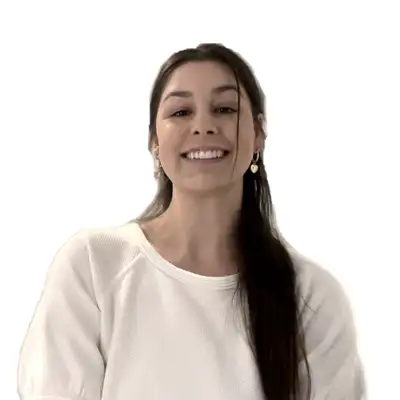
Investor Spotlight: Deborah Benton of Willow Growth Partners
Deborah
Foreign. The goal of the deck is not to get an investment. The goal of that initial deck is to get a second meeting. So don't put too much into that. I think it's between 2 minutes and 45 seconds and 3 minutes is the average amount of time that is spent on a Doc scent, so or that original investment deck. You have to get to the point pretty quickly. It should not be a long deck at this stage. Know who your audience is and what your goal is. Your goal is simply to get either a zoom or in person meeting.
00:40
Deborah
So you're sending off your deck, who you are, why you should exist, what's your point of differentiation, what is your moat, your initial projections of you know, where you are, where are you going to be in the next couple of years, the competitive field, how you're competing within that. Like there's standard things that you just need to really get across to pull yourself away from everything else that is vying for that fund manager's attention.
01:08
Hannah Dittman
Hey everyone, I'm Hannah Dittman, Operations and Finance Correspondent at startup cpg and today I'm thrilled to be joined by Deborah Benton, founder and Managing Partner of Willow Growth Partners. Deborah brings decades of experience operating, scaling and investing in consumer businesses. Before launching Willow, she was a prolific angel and advisor to multiple high growth startups. Earlier in her career she held executive roles including President and COO of Nasty Gal, COO of ShoeDazzle, and operated during the earliest days of E commerce. In this episode, we dive into the real challenges of being a founder, the psychological demands that aren't talked about enough, and how investors can better support the human side of entrepreneurship. Debra also breaks down the spectrum of early to late stage investing.
01:54
Hannah Dittman
How it shows up in check sizes, diligence and outcome expectations, and how to think through valuation and choosing the right investment partner. We also cover common pitfalls founders make when fundraising and what separates strong, enduring brands from the rest. Whether you're raising your first round or scaling toward growth equity, this conversation is packed with wisdom. Enjoy. Hey everybody, welcome back to the Startup CPG podcast. This is Hannah and today I'm here with Deborah Benton, an investor from Willow Growth Partners. Deborah, welcome to the show.
02:28
Deborah
Thank you so much. It's great to be here.
02:30
Hannah Dittman
We're so happy to have you here today. I'd love to kick off with you introducing yourself. I know you have a really interesting background prior to investing as well. Can you share your title, a background of your experience prior to Willow Growth Partners and what led you to investing?
02:45
Deborah
Sure. My My name is Deborah Benton. I'm the founder and managing partner of Willow Growth Partners. We are an emerging growth consumer brands focused fund. We launched the first fund for Willow back in 2020. Prior to investing I spent six years as angel investor and doing a lot of board work and that was on the back of a long career operating in consumer brands. I came out of business school, did a couple years of management consulting and then found my way through following a client into the consumer brands world and in the late 90s, loved it, knew that's where I wanted to stay and spent about 15 years operating moving over to the online world pretty quickly. I was really enamored with the relationship that you can build with consumers, the data that you can get from the online world.
03:30
Deborah
And then of course as we learned more about how the online channel was going to be integrated into, you know, the entire channel portfolio for consumers, this moniker of omnichannel came up. But essentially brands just need to be wherever the consumer is and the online channel is simply that. It's one of many channels. So I've spent most of my career in consumer, I love consumer brands and it's really just a joy now at this stage of my career to be able to be investing behind incredible brands, visionary founders that are really bringing joy to consumers lives.
04:02
Hannah Dittman
What a stellar intro and I love what you said about the channel as a strategy not mattering maybe as much as meeting the consumers where they are. I think a strong insight. Can you also provide an overview of Willow Growth Partners and introduce your fund as well? I'd love touch on any major investment criteria, your stage, focus, themes, how you differentiate all the kind of intro information that someone might need to know about you.
04:28
Deborah
Yeah, absolutely. I will direct everyone. We just launched a new website so congratulations. Thank you so much. We love it. It was a labor of love. We spent a long time on it. We're consumer brands investors, so our own brand, the brand of Willow is really important to us and I think this new website truly reflects our ethos and our values. So we are an institutional fund. We are investing in brands at the earliest stage. So we are looking for brands that are generally doing, I would say 1 to 5 million in trailing 12 revenue. We don't do pre launch, although I say that and we have done pre launch, but we tend to stay away from it. It's, it's just not really our sweet spot.
05:07
Deborah
We do want to see a little bit of market sit on operational data, a bit of repeat data. You know, we want them to be commercialized but that being said we do get to know brands at the pre launch stage because relationship is really important to us. So we will sometimes spend years getting to know founders before we actually invest. The categories that we invest mostly behind really all support the consumer's wellness. So that can be in the form of beauty, personal care, cpg, health and wellness. We do a little bit of food and beverage, we like pet, we like baby. If I had to narrow it down, I'd say probably 50% plus of our investments are in beauty, personal care and health and wellness, all of which are intersecting with one another.
05:50
Deborah
They used to be really regarded as separate silos and now it's really hard to differentiate sometimes between them. We are looking for on the qualitative side because we are such early stage investors, the founder relationship and alignment with the founder is incredibly important to us. The why that they are doing it, what problem are they trying to solve, really getting to the details of how they're differentiating themselves. The positioning is really important. As you know, it's a very competitive field. Consumer brands are incredibly competitive. So coming out with just another brand without being very thoughtful around your positioning, your value proposition, who you're talking to, it's just going to be a tough road from a competitive perspective. So we spend a lot of time really trying to understand the positioning of the brand. What is the actual moat, the team values.
06:38
Deborah
We are really focused on ensuring that we're aligned from a values perspective with the founder. We are not passive investors. We're not going to write a check and walk away. We are there to hopefully be viewed as an extension of the team at the earliest stage and help out wherever we can. And then I'd say on the quantitative side, because we want to invest post commercialization, we're very focused on margin profile. So, you know, initial product margin, gross margin contribution one, contribution two. EBITDA is less important to us at this stage simply because there's no operating leverage. It's a very subscale brand. But we need to see the path. We're looking for a path to profitability.
07:18
Deborah
If the brands are not profitable and generally we've been doing this long enough, we can understand how with operating leverage you're going to get to a positive ebitda. Should your product margin be where it needs to be and your early indications of your gross margin should be where it needs to be. And then I'd say, you know, we're investing behind brands that are building long term relationships with consumers. We're not looking for brands that are kind of selling one and done products to the consumers. We want there to be some indication of repeat purchasing. Some of our brands have a really successful subscription program. Not necessary. But some of them lend themselves well and that actually brings value to the consumers lives. A great example is were the first investors in diaper brand called Coterie, which you may have seen in the news recently.
08:04
Deborah
Just announced a huge exit.
08:06
Hannah Dittman
Congratulations.
08:07
Deborah
Thank you. Incredible brand, incredible founder, incredible team, incredible execution. That's just where the stars all aligned. They have an incredible subscription program because that makes sense to the consumer. For trying to force a subscription program onto a consumer almost inevitably backfires. But some of these brands lend themselves well and where it adds value to the consumer, it makes sense and we love those. But even outside of a subscription program, seeing early indication of repeat purchasing is really important to us.
08:38
Hannah Dittman
Well, thank you so much for all of that information. I feel like that provides an amazing context of where you like to focus and the kind of businesses that make sense for your stage. I'd love to kind of hop into a concept that maybe you can help me dig into and describe a little bit. Now that we've gone through a few of these series, I think it's apparent for our audience, I hope that investors kind of have a different mindset, strategy and approach to different things. And I think a lot of that differentiation can be explained partially by the stage of investing, whether it be VC growth, pe. Those are very different styles of investments. Check sizes are very different.
09:16
Hannah Dittman
You know, in your perspective, what do you see as the difference between maybe a very early venture capital, CPG investment fund, a growth fun and maybe a later stage style? Do you have any perspective to share on explaining some of these differences in concepts?
09:32
Deborah
Yeah, it's such a great question because a lot of founders, you know, the investing world is very opaque and I'm convinced that it's because it really benefits the investors. There's not a lot of transparency out there. And you know, as a former operator, I raised a lot of capital from back then it was truly tech venture capital firms. And I was always aware of this true disparity in knowledge and therefore power when it came to raising capital. One of the things that we're trying to do at Willow is just be very transparent and help educate founders understand the differences is it's very frustrating. Raising capital is very difficult in the best of times. These are definitely not the best of times.
10:11
Deborah
But the more you can understand the things that you were just asking about stage check size, really it corresponds to what's called a portfolio construction model. Which is really the basis by which these funds are operating. And you can think of a portfolio construction model as a budget or operating plan for the fund. It really dictates when we go out to raise capital from LPs, we are providing them with a model that is saying this is how we intend to deploy the capital that we are raising for this fund. This is how we expect that capital to perform. And here's the timing of the cash flows, that's what we are providing and we have to try to live by that as much as we can.
10:51
Deborah
So those questions are incredibly relevant and it really does dictate, you know, your entry point, what you're looking for, how you're valuing it in turn, your expectations of timing and how you expect that company to exit and therefore how you're returning capital to your LPs. The words that you are using, VC versus early growth versus buyout. These types of funds all have very different portfolio construction models and their expectations of how they're going to return capital. And it corresponds very much to the level of risk. The earlier you go, the higher the risk, probably the higher modeled out failure rate that you anticipate of some of your portfolio and therefore you need to offset that with higher multiples on the ones that do succeed as opposed to the true buyout funds at the other end.
11:43
Deborah
You know, very late stage financial sponsors that are buyout funds, it's not that it's a sure thing, but it's certainly a very de risked proposition. But they're probably underwriting to a two times return. You know, when we get involved, we would never underwrite to a two times return because it just doesn't make sense, it doesn't make mathematical sense because we're so early stage, we're taking on a lot more risk and we are going to model out some level of failure rate within our portfolio. So it's along this spectrum we see Willow sitting at the intersection of vc, which I think of mostly in tech terms. So tech VCs, we think about the Andreessens or the Lightspeeds or the Sequoias, I really think of them as tech capital. But we take on early stage risk. We're going in at probably the earliest post launch stage.
12:31
Deborah
But we bring with it a lens of some private equity, more traditional private equity views around. We're really looking at margin profile, we're really looking at capital efficiency, we're really modeling out to profitability, things that tech VCs really within their model are not looking at. So we often describe our positioning as, you know, a Venn diagram of us sitting kind of at the intersection of taking on early stage risk, but bringing with it some of the more disciplined approaches that private equity does in the consumer brands world. And that's how we arrived at this emerging growth moniker that we use for ourselves.
13:14
Hannah Dittman
So insightful. And I love that you were describing. I think we all kind of do this with our hands when we're trying to explain it. I love that you described it as a spectrum. I took an alternative investment class in college when I first learned about the different investment vehicles and things and anytime I tried to explain it to anyone younger than me or, you know, going into the job market, that's how I always thought of it as well as a spectrum. And I think anything you're like you're mentioning, anything you're talking about, check size gets bigger as you go along the spectrum. Historical data that you need to focus on gets more fulsome as you go along the spectrum.
13:47
Deborah
Yes. That also then corresponds to the size of the fund, which then corresponds to the kind of returns that you need to provide. So for it all comes back to exits and what you're modeling out as your return profile. For LPs that are looking to invest in these alternative assets, they themselves are going to have their own portfolio construction model that says we want to allocate so many dollars to a higher risk because we're expecting a higher return. It's all about expected returns and we're going to allocate so much to the buyout funds where it's significantly de risked. But we know we're only going to get two times return. But it's still higher than, you know, what a money market or a bond market is going to return.
14:28
Deborah
So they're trying to manage the deployment of their capital across, you know, many different kind of asset classes to optimize their returns as well for the level of risk that they're trying to take on.
14:39
Hannah Dittman
Very well said. I'd love to pivot a little bit now that we have that context in the back of our minds for the rest of the conversation, we're talking about your work with coterie and the success story that was. Do you have any lessons learned or reflecting and looking back on that experience from when you got involved with them from the beginning, things that felt very compelling to you that ended up coming to full fruition now towards the part of their journey that they've reached?
15:05
Deborah
Yeah, I'll take you back. I mean, we met Frank Yu, who was the founder of Coterie, back in actually the fall of 2019, he had just launched the brand that summer. He was going out to raise. And if you think back to that time, Willow didn't exist. Other emerging growth, consumer focused brands that could have provided that first check really didn't exist. If you look at how the funds world in the consumer brands world has evolved over time, you had some really amazing partners from later stage funds leaving and going and starting their own funds and coming in at kind of colloquially what's known as the Series A. And that was great. But really for them to get interested, the brands needed to be doing somewhere in the region of $10 million. Okay, wonderful.
15:53
Deborah
You know, that started to emerge, but nobody was doing it at the one stage earlier. And so when we first met Frank, he was going to the tech funds, you know, the tech seed funds that would play at that stage. And they, you know, had seen kind of the, some of the challenges that the honest company had faced. Hello. Bello was kind of in the market and doing their thing with Walmart. So he wasn't having a lot of success at raising from these more traditional kind of tech VCs. We actually mobilized a first close of our fund in May of 2020 around wanting to do this deal. And when we met Frank, I think we finally did that in May of 2020. So we spent about six months with him, getting to know him and try to understand the story.
16:37
Deborah
He had truly re engineered the diaper. It was a better product, it was softer, he had changed the design. It was twice as absorbent as anything else on the market. I mean, it was a truly differentiated product which was really important to us. He had also shared with us the story of an interesting Japanese brand that had launched a few years earlier and had made great inroads in the China market. And he was thinking, why does this premium offering not exist in the US market where it really should? So we saw his vision, we saw the product. My partner at the time had a baby at home. She was using the product and she's like, no, this is crazy. Like, I know it's a little bit more expensive, but you know, I know moms will pay for this.
17:18
Deborah
So we really bought into his vision that this was going to be a premium baby personal care, really around a diaper hero product. And he hired a world class team, an absolutely extraordinary team. He himself, great visionary for this brand, super smart, understood the power of subscription and executed incredibly well. And this brand needed to exist and should exist. And this exit is fantastic. I Think for both parties and the consumer.
17:46
Hannah Dittman
That's so incredible. You know, you've talked about his ability to lead a team, his vision on the product. Outside of maybe this example too, is there anything else when you're evaluating founders or earlier opportunities that you're really anchoring on as an investor, especially from a founder perspective?
18:03
Deborah
Yeah, I mean, at this early stage, we invested in Coterie and he was doing I think around $200,000 a month. I mean, it was really early. I think it's been published that the brand will clear north of 200 million net this year. So this has been a rocket ship, an absolute rocket ship. Truth be told, we didn't underwrite to it being this successful. To be perfectly honest, Frank and his team excelled even more than what we had anticipated. I would say from the founder perspective, we are really looking for people that are aligned with how we like to work. We like collaboration, we like transparency. We view ourselves very much as all on the same team. We're very transparent about how we think about these brands should scale and exit.
18:53
Deborah
We're not looking for multibillion dollar exits when we get involved, because we're getting involved very early. There could be 300, $400 million exit, which is extraordinarily successful for everyone, provided capitalize. We value the business appropriately at each stage, being capital efficient. We're not on this hamster wheel of raising, raising our preference to protect the founder's ownership. Our preference is to raise as little as possible. Like don't go out and raise, try to get to, you know, work on your margins, get to profitability within reason, without compromising growth too much. But you know, with these margin profiles, particularly in some of the categories that we work in, beauty, personal care, health and wellness, there's no reason to keep raising and raising.
19:37
Deborah
You can raise our round, maybe there's a bridge depending on how fast the brand is scaling and then ideally one more partner, you know, and that partner could be a prelude or a Catterton or a VMG later stage, that will be the last partner at the table. And that round could be, say at rounds 10 to 20 million dollars should the brand need a little bit more capital later on. These funds that come in after us, they have pretty big funds, they can provide that. First of all, this growth at all cost model never worked, absolutely never worked. In consumer brands, we're in a much more disciplined environment. Capital is no longer zero cost.
20:13
Deborah
And so the cost of capital has to be incorporated into the decisions around how to spend for growth, which I think is very disciplined and the way it should have always been. But yeah, we have that conversation with a founder getting alignment around how we think about scaling brands, what's important to us, what's important to the founder, kind of holding hands, and we don't have crystal balls. We can't foresee the future. We certainly couldn't have foreseen the last five years. But we do take a very rational approach and we want everybody at the table to win, including the founder, including the team members, anybody else that has common shares. We want everyone to win.
20:51
Hannah Dittman
That's so helpful and I think shows what a great and thoughtful investment partner you are. I think you want to definitely be working with someone who has a very good understanding of your journey, both before them, before you get involved, and then afterwards as well, and is not just only thinking about their third piece of the puzzle and what's in it for them. You know, you've obviously come from a very extensive background in both the operating and investing world and have seen quite a lot of different phases of the journey. If you had advice for operators now, knowing what you know on the investing side, what do you think some of the key learnings going to the other side of the table?
21:26
Deborah
It's wonderful because I think the more that both the investing world and the operating world can understand about the challenges of each other's world, the better the relationship will be. From an operating perspective. I couldn't do what I do without having many years operating. I made so many mistakes as an operator. I made so many mistakes raising capital at too high evaluations, not understanding the mechanics of the fundamentals and what success would mean to the fund. And this is why we're so transparent with our founders when we're talking about this, because everybody should be successful. We're going to be. We are all individually motivated by what means success for us. We have many LPs that I feel incredibly responsible to return. You know, they've placed their trust in me.
22:14
Hannah Dittman
You're in the same boat in some ways.
22:16
Deborah
We're in the same boat. We're absolutely in the same boat. There's a lot of alignment between what is motivating our behavior and what is motivating a founder behavior. As soon as they take on capital, there's an incredible responsibility to your investors to return and provide a really strong return. We are very open about that. So I think from our perspective, again, helping the founder understand the mechanics of our fund, why we're doing, what we do, how we're motivated, the obligations that we're under. I think that helps a lot. And in turn, because I came from an operating background, I have been there. It is so difficult. I don't know how else to say it. Like I have so much respect for founders and operators that are scaling these businesses. It's not even just the work, the intensity, the stress.
23:07
Deborah
It's almost the psychological, emotional and mental strength that you have to go through that you have to experience every single day. The highs and lows are not like, you know, one every third day. It's the highs and lows are multiple within one day. And that is really mentally taxing. It's very difficult. And for a lot of these founders, they don't have a great deal of experience in managing people, for example, they don't have a great deal experience. Some of them are not particularly strong or confident in managing a P and L. You know, especially for these fast growing brands, these individuals are thrown into extraordinarily high pressure cooker environments where they don't necessarily yet have the skills and we expect them to succeed incredibly well and return all this money. And it's difficult, it's wrought with emotion.
24:02
Deborah
And I think the more that both sides can understand what everybody's going through, have a transparent conversation, it's a safe environment, things are going to go right and things are going to go wrong and we understand that. We just want founders to feel safe and comfortable with us, to come back to us and say, look, this work, this is a disaster like because we can't help if we don't know and the onus is on us to create that environment that is supportive and understanding and focus on problem solving and not blame.
24:30
Hannah Dittman
Deborah, so well said and such an empathetic and understanding lens that you have, which I think really sets you apart as an investor. I think a lot of investors you'll hear, especially when they have founded their own funds, that I think as a way to relate, they kind of think of themselves as entrepreneurs a little bit as well. But I would say I think it's just a different animal in operating because the world of problems that you're trying to tackle is so varied and so much more broad and so much more ambiguous. Not that investing is not hard and not that starting a fund is not hard. Of course all of that is incredibly difficult. Very few people succeed as that as well.
25:07
Hannah Dittman
But it's a little bit more easier to wrap your head around and understand what the things you need to do are to go through them.
25:14
Deborah
I agree, like we can feel second order stress from what's going on, you know, with our portfolio companies. And we do feel it and that can be stressful, but we're not in the direct line, if that makes sense. So you're absolutely right. Like what we're all doing is hard and there is ambiguity. But I'd be the first to say this is not what we do is not nearly as hard as founding and scaling a brand. It's just not. We know the path, it doesn't always go the right way. Our job is not that complex. Right. We spend a lot of time trying to meet as many founders as we can, sourcing new opportunities, doing deals, supporting them as much as we can, and then helping them get to an exit and return and then eventually going out and raising a new fund.
25:58
Deborah
That's the path. Now there's a lot that can go wrong with each of those aspects, of course, but that's kind of we know how we're going to allocate our time. Launching a brand is just the wild west. Anything that can go wrong does everything goes wrong. There's innovation happening, there's new competitors popping up all the time. You're dealing with retail partners, you're dealing with suppliers, you're dealing with a consumer base that is subject to macroeconomic forces, a social zeitgeist that is changing, cultural influences that are changing technology, that's changing. Like it's really hard. It's very exciting. I don't want to put people off for lunching.
26:39
Hannah Dittman
You know, we have such a wide founder audience and I think most of them will probably appreciate to your point on psychological as well. You know, as a founder, it's not like you have a boss telling you did a good job that day. You're kicking yourself 247 anytime something goes wrong and if it's going right, you're like, thank God it's not on fire. So I think in a way at least what I've seen in my journey of my career as well is I think a non driving factor.
27:04
Hannah Dittman
But a nice halo benefit of working with an investor sometimes is finally feeling like some external validation from someone you respect and trust telling you're doing a good job, giving you a gut check on what you're doing, feeling like you're not psychologically fully in it alone and having a little bit more of that emotional support in a way.
27:25
Deborah
It's like I often think, especially for solo founders, for all founders, it's incredibly lonely. Like people really don't talk. We don't talk about this enough. We don't talk about the mental strain of the loneliness that founders feel. And you know, we don't help ourselves with social media and LinkedIn posts. And I'm guilty of this as well, where we're celebrating all of like, oh, it's so great. And they did this raise. Well, doing the raise, is that really something to celebrate? I mean, it's exciting because it's the next stage, but my goodness, you know, you're at step one of now, you've really got to go execute on that. There's a tremendous amount of mental strain that I don't think we talk enough about. I don't think we. There's enough support out there and there's enough understanding the media.
28:10
Deborah
And believe me, I understand my part in this as well. We glorify these, you know, big number exits and these meteoric rises and we don't talk enough about the behind the scenes ups and downs. And even the brands that you know are supposedly overnight successes, first of all, there's no overnight success.
28:27
Hannah Dittman
None. None.
28:29
Deborah
But even those, we don't spend enough time talking about the heartache and the tears and the frustration and the anger and the sadness and the despair. I think we should talk a lot more about that and just normalize having that discussion. Because I don't care how successful of a brand you are, you have been through all of those. We're one of the earliest stage investors out there. But by the time we're ready to do an investment, usually the brand has been around for at least two or three years, sometimes more, sometimes not. But usually, you know, there's an R and D, there's getting off the ground. They may have raised a little bit of angel money or friends and family, and they've already struggled for two or three years before. And we're the earliest institutional fund. Right.
29:17
Deborah
Our rounds are usually 3 to 4 million. When you think about that and you think about somebody has already dedicated two or three years of their lives, sometimes longer, with so much ambiguity and so little feedback mechanism as to am I on the right path? Is what I'm doing correct? Am I thinking about this the right way? I have so much admiration for founders. I really do. Yes, I will say, going back to an earlier question, you know, kind of giving advice to founders, when you do choose your partner, when you go out to raise capital and you're talking to funds as much as you possibly can, you are diligencing them as a partner as much as they are diligencing you.
29:57
Deborah
It is in your best interest to really back channel, reference, spend time with them, go break bread with them, figure out what makes them tick in that dating process. Everything looks golden, everything's always great. Until you hit challenging times. As much as you can, get to know the kind of people that are going to be around the table when you do face challenging times, because you will. So selecting your partner and figuring out who the right partner for you is number one advice I would give people.
30:27
Hannah Dittman
And such great advice. I think that is a long term relationship. And you're often very tired fundraising and very eager to get money and very eager to be doing all the other things that you want to get back to doing. And you've got a team that you're managing on the side and you've got your real life going on. So it may not be the number one thing that's top of mind, but boy, will you be happy at the end of the day, a couple years down the road when you've got the right person in your corner versus the wrong one.
30:52
Deborah
Absolutely.
30:53
Hannah Dittman
I'd love to kind of get your perspective. You know, you've probably seen I don't even know how many deals or how many conversations you have with founders throughout the year. I'm sure it's hundreds, if not up north of a thousand. What are some of the common mistakes or missteps you see founders or companies making when they're going through the fundraise process that you wish maybe you could just be like, oof, if they just understood how to position this differently, this would be stronger for them or some common pitfalls that people fall into.
31:20
Deborah
Yeah, I mean going back earlier on our conversation of how different funds are positioned. Look, your greatest resource is your time. So the more preparation you can do in advance of understanding. And is this fund, are we even in the sweet spot of this fund? So you can Google, you can talk to people, you know, there's a two by two matrix of stage of fund check size, who plays, where will they lead? Are they just participating? Like getting a market map of who your target, narrowing your target down to the ones that are reasonably could participate, I think will save you so much time and that's a few hours of research. Hop onto ChatGPT, they can tell you exactly kind of who your target funds are that I would really recommend.
32:04
Deborah
The second is know the funds just spend a little bit of time of understanding. Take a look at their portfolio. Where is their sweet spot? We look at probably one to 2,000 deals a year and we might do four or five maybe. So it's hard to break through the no it's the more you can facilitate that conversation and provide to the fund manager a reason why this opportunity fits within their scope and their sweet spot and their portfolio, the better if you do a little bit of the lifting up front. So there's that prep work that I would really encourage people to do. The second is when you're putting together your deck. The goal of the deck is not to get an investment. The goal of that initial deck is to get a second meeting. So don't put too much into that.
32:52
Deborah
I think on average I actually researched this at one point. I think it's between 2 minutes and 45 seconds. And 3 minutes is the average amount of time that is spent on a Docsend or that original investment deck. You have to get to the point pretty quickly. It should not be a long deck. I don't know, maybe 10 pages. Really @ this stage, again, know who your audience is and what your goal is. Your goal is simply to get either a zoom or in person meeting. So you're sending off your deck, who you are, why you should exist, what's your point of differentiation? What is your moat, your initial projections of, you know, where you are, where are you going to be in the next couple of years, the competitive field, how you're competing within that.
33:35
Deborah
Like there's standard things that you just need to really get across to pull yourself away from everything else that is vying for that fund manager's attention. I would say once you get that meeting, for us, the storytelling is incredibly compelling. So the more you can share about your background, the reason why you're doing it. You know, I often correlate how strongly I believe the origin story is to what can I expect in terms of like future tenacity or perseverance of how that founder is going to get through really difficult times. So don't underestimate the power of the storytelling. I rarely, unless the founder insists on it. On that first meeting, I don't want to go through a deck. I've read it and I've said yes to a meeting. I now want to focus on you as a founder. Who are you? What drives you?
34:27
Deborah
Where did you come from? Why are you doing this? What does it mean to you? What, what does success mean to you? Who are you doing it with? What are you hoping to solve powerfully? Are you motivated to solve this problem? That's far more compelling to me once I've ticked the boxes that I'm interested in this category. It's an interesting brand. They've got some early traction I understand the positioning, I understand how they can compete, they've got a chance. That kind of stuff I don't really need to go into at that first meeting. I don't need to go more into that. I really need to understand is this somebody that I believe has the tenacity, the perseverance to take it through to the end, that really wants that is aligned to how we think about this brand should scale.
35:08
Deborah
So, you know, I think people sometimes want to delve right into the deck and the metrics. We're early stage investors. There's not really a lot to go through. I want to get to know the founder, I want to get to know the story. I want to get to know why you think this brand should exist in this world and how you're going to ensure that it does. And then I'd say the next meeting, you know, if we get into diligence, you don't need to be an economics or finance major, but you have to understand the financial metrics of how the business operates and how it is going to operate. If you want to bring in somebody else that supports you on that, I'm totally fine with that.
35:45
Deborah
But for me, I don't understand how a founder can make decisions if they don't understand the very basic principles of things like gross margin, product margin, your unit economics. I don't know how you make decisions to deploy capital if you don't understand how it's going to return or how it's going to fit into your model. So I need to believe that you don't need to be that person. You could have a fractional CFO, you may have somebody supporting on FP&A that can get into more of the details. But I need to believe that you fundamentally understand, you know, what the financial mechanics of this business are and how it's going to scale and eventually become big and profitable. That would probably be my suggestions.
36:25
Hannah Dittman
Yeah, no, that is so helpful. And I think it really pulls back the veil. And every firm and fund manager has a different priority settle to some extent in a different style. But I think especially for working with you, it is so helpful to just understand, especially if someone's never seen it before or they've maybe never done it, quote unquote, the right way or something. It's really helpful to just understand what does best in class look like and what am I supposed to be doing. And I think that's a great example to share. I'd also love to take a couple minutes to talk through, you know, you're such a sophisticated investor who's playing around a few different sectors in consumer and has obviously had some awesome success. I'd love to now focus a little bit on future looking.
37:04
Hannah Dittman
What are you excited about in the market either in terms of the CPG landscape in general, consumer behavior shifts, any trends that you're excited about, or just the investing industry in general. What are some things that get you excited for your job and keep you thinking?
37:19
Deborah
Yeah, we think about this a lot. I would say we have to stay on top of the macro, what's going on in the macro because the consumer doesn't make decisions in a vacuum. So things like inflation, geopolitical risk, as crazy as that sounds, tariffs, AI, the job market, these all play into, you know, what we monitor as consumer sentiment and how the different groups within the consumer world, how they are reacting. So, you know, we came out of the post pandemic exuberance of spend, spend and were hit with some pretty nasty years of inflation. And while inflation has moderated somewhat, we're still not at the target rate. The Fed is responding. We saw a 25 bips cut earlier in the fall and I think we're, you know, the market has certainly absorbed the anticipation that there's going to be future cuts.
38:11
Deborah
But that's not because we're at the target inflation rate. It's still elevated. It's because the jobs reports are pretty scary. And I think Powell is responding more to we got to get this economy going because we're really facing some scary stuff. You layer that with kind of this existential angst around AI and the impact that's going to have on jobs and you know, the consumer is kind of scared. Sentiment has definitely dropped. Certainly I'd say the middle segment of the consumer world, those buyers are probably exhibiting the highest shift in how that they're buying. It's a much more considered spend. So, you know, this backdrop is really important to us as we're thinking about how the consumer is going to respond. And that affects things like channels and which channels should we focus on and where should we not.
38:58
Deborah
We really do focus mostly on what we would consider more on the essential side. So whether it's health and wellness or food and beverage, most people would even consider their beauty or personal care routine pretty essential. Feeding your family essential, feeding your pets essential. We really do focus on that area. So we have certainly been somewhat protected. But there are changes that are going on in the consumer world. That being said, I'm excited because I think we're in A much more rational environment where again we had years and years of basically free capital that was fueling unsustainable growth. When you have a zero cost of capital, you could just go raise capital. And nobody's, you know that zero cost is not playing into how we're valuing businesses and how we're underwriting exits.
39:45
Deborah
And importantly on the exit side that sponsors or the strategics, they're also playing with zero cost of capital. So you know, the algorithm changes once capital starts to become a little bit more expensive. So we're in more of a rational environment, I would say, which generally excites me because it becomes more logical. You have to be a lot more thoughtful in terms of categories because we're always trying to think about wellness for today's families, better for you, better ingredients. We're really interested innovation on the beauty and personal care side behind science backed new ingredients that are coming in, clinical testing, things that have proven efficacy, not just white labeling kind of creating another pretty brand and white labeling it There is real frontier innovation that's I think happening there. And then, you know, I love the food and beverage side.
40:38
Deborah
There's a lot happening in food and beverage. Again, supporting wellness. You know, we have two investments in the food space. One an amazing no seed oils frozen french fry brand called Jessie and Ben's and then another in a healthy Mac and cheese called Goodles. And what they have done to very sleepy categories and very sleepy aisles is truly innovative. They're not asking consumers to even change their buying decision or their eating decisions or behavior. They're just providing healthier alternatives. That's a really exciting opportunity for me. You know, when you're going and you ask consumers to fundamentally shift how they're behaving, that's a little bit harder. Not impossible, but a little bit harder.
41:20
Deborah
But these amazing brands are just being so thoughtful about taking all the nasty ingredients out, replacing it with a higher macro, better nutrient profile and saying look consumers, we've done the heavy lifting for you can still enjoy your delicious amazing fries and Mac and cheese, but it's a healthier option. Those opportunities actually really excite me.
41:41
Hannah Dittman
That's so well said. And I'm a huge Jesse and Ben's and Goodles consumer. So I totally agree. It's like relieving for a customer when you're like, oh my gosh, I can eat this stuff again.
41:53
Deborah
I know. Or feed it to my kids and not feel guilty. I can actually feel pretty good about, you know, feeding french fries to my kids.
41:59
Hannah Dittman
Yeah, the better for you shelf flip is finally coming to the ancillary aisles, which is awesome. As you know, startup CPG has the largest slack community in the industry, with now over 30,000 members. I'd love to pull a question directly from our channel and have you answer as a case study for any founders with a similar question. The recent question was how do I know what valuation to ask for?
42:24
Deborah
Oh, my goodness, what a great question. This is art and science. So I'm going to start by saying at Willow, we are disciplined around this. And we're not disciplined because we're cheap. We're disciplined because we want to pave a path that will have the highest chance of success for everybody. So if you approach capital raising with a mindset of I'm trying to optimize for valuation, you will get yourself into a lot of trouble. We saw kind of in those exuberant days of 2021, even the early part of 22, lots of deals that came around that were really interested in, but the valuations were insane. And they're insane because we can't see the next step. And we try to take founders through. Okay, here's where you are. Here's the stage of business.
43:13
Deborah
This is roughly where we think you should be coming in at with this size of check and this, you know, according to your model, this is how long we think the cash is going to take and where it will take you to. And at that point, you will hit the thresholds for that next stage of investor. And this is how they're going to think about it, because we know how that next stage of investor that has a lot more data, a lot more numbers and historical financials to base their valuations on, which, by the way, are completely correlated to the expectation of what they're underwriting to for exits. You know, there's no hidden kind of game here. It's. Everybody's thinking about what is the path.
43:52
Deborah
And we are even at the earliest stage, are thinking, okay, this capital that you raise right now, let's say you're raising three or four million dollars. Now let's take a look at your model. How are we going to apply it and how is that going to scale the business and where is it going to take you? Let's say it takes you 24 months. Where do you expect to be in 24 months? Are you at a stage that is going to attract that next stage of capital and hopefully never raise again? Because if you're there and that next stage of capital, this is how they're going to think about it and this is how they're going to value. So how do we value the risk and the time value of money in those two years that the early investors came in at?
44:31
Deborah
What kind of return is a reasonable return for the risk and that time value of capital for when that next investor comes in? Like what makes sense? And if they come in at that stage, I can tell you they're going to be underwriting to X After three or four years, say your ownership is going to be here. Are you comfortable with that? Because that's how we're seeing the path. That's a conversation that every founder should have with any investor that they're serious about getting involved with. Everybody should understand it doesn't mean it's exactly going to turn out that way because stuff happens. But that conversation needs to exist, how people are thinking about it and then to the degree that it turns out that way, great. If not, at least you've had the conversation and you can kind of pivot together.
45:17
Deborah
So how should you think about valuations? It's a conversation. I can give you general guidelines, but there's so many nuances depending on category, margin profile, speed of growth, competitive environment, differentiation, brand resonance, who the founders are. There's a lot of different things that will actually play into that. But in general, I would say at our stage it could range if you're looking at top line. Not always, but often our businesses are EBITDA negative, so we're not going off of an EBITDA multiple. But keep in mind, by the time these businesses go to exit, it will probably be an EBITDA multiple. So there is a change that happens somewhere in there that has to be accounted for.
46:04
Deborah
But if we're looking at revenue and it's scaling pretty quickly, it could be anywhere from a two to three times top line up to maybe at the highest stage a four to five times top line. But there's so many factors that go into that, like so many factors that founders don't ground yourself in that number. Meet partners that you think you can work with and then have a discussion. The best negotiations that I've ever had are open discussions around expectations and where do we want to be and ownership. Optimize for your ownership, optimize for the partnership that's going to preserve your ownership and give you the best chance of success.
46:46
Hannah Dittman
Very sage advice and I think an important mentality to approach things with where a much broader picture and a lot more variables going into things than just needing to kind of like slap a Price sticker on something. And so I think that's really helpful context to get people's minds spinning in the right direction. Before we wrap up, I want to take a second to make sure our audience can have an actionable next step to apply all of this amazing knowledge to Deborah. We've covered so many different topics and I appreciate you and thank you so much for sharing such amazing insights. For founders that want to get in touch with you, where can they find you or what is the best way for them to get in contact?
47:24
Hannah Dittman
And for operators or anyone looking to transition or that might be interested investing or working directly with you all, what advice would you have for them?
47:31
Deborah
Yeah, so first in getting in touch with us again, check out our website. We're@willow growth.com I think that there's a contact us button there. You can also reach directly out to me. I'm at Debra at willowgrowth. LinkedIn. Certainly link in with us. That's the best way. If you can get connected through another founder or a service provider or somebody that is in our ecosystem, even better, but not necessary. I truly do try to respond to all of the emails that I get. Sometimes it's a little harder than not. I operated for many years and then about 10 years ago moved into angel investing and did a lot of board work for about six years. I built up angel portfolio which was, you know, on the back of that angel portfolio allowed me to go out and raise the funds. So that was certainly helpful.
48:18
Deborah
I love bringing angel investors even into the rounds that we do because they can be so strategically helpful and they play a different role than a fund does as you're kind of piecing together a round. I think the best way to get involved is try to meet the fund managers, try to be helpful in deal flow. We get a lot of deal flow from folks like that are in the operating realm that, you know, no founders here are people that are raising. They send us deals. Sometimes they get involved in those deals as a result of that being advisors, getting a little bit of equity for advisors, maybe there's opportunities for some board roles. That's the best way. Like immerse yourself in the ecosystem. The fund managers and the investors we see a lot, but so do the founders.
49:02
Deborah
You know, there are founder circles, there are founder communities and ecosystems. There are really great events to go to. Just immersing yourself in the ecosystem is the best way to get involved.
49:12
Hannah Dittman
Thank you so much for your time today and all of the amazing wisdom and knowledge that you shared. I think it's going to be an awesome episode and I'm sure everyone is going to be really excited to reflect and listen to all of this advice. Deborah, thank you.
49:24
Deborah
You are so welcome. Thank you so much for having me.
49:28
Hannah Dittman
Thanks so much for tuning in everyone. If you like this episode, show us some love with a five star review at ratethispodcast.com startupcpg I'm Hannah Ditman, podcast host and Correspondent here at Startup cpg. I hope you'll join me again as we dig into more juicy topics like ops, finance and all the real talk founders actually need. Come say hi on LinkedIn or ping me on Slack. I'm always eager to hear your questions or brainstorm future episode ideas. If you're a potential sponsor and want to get in on the fun and appear on the podcast, shoot us an email@partnershipstartupcpg.com and last but not least, if you haven't already, don't miss out on our free Slack community for emerging brands and CPG lovers alike. Join us@startupcpg.com. We'd love to have you. See you next time.
Creators and Guests