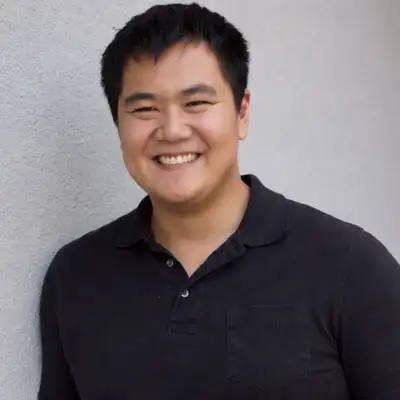
R&D RADIO: Travis Zissu from Scale Food Lab
Travis Zissu
Working as a fully certified FDA facility does prevent us from doing certain things like saying, hey, here's this bottle, go have your friends and family try it. Of course, we can give them the warning of all that. Try to make sure we follow all the rules and regulations that we need to still run as an FDA certified facility. But we try to make it as flexible as we can within the rules so that we can be a place to play, a place to learn, a place to test.
00:35
Adam Yee
Hey everyone, this is Adam Yee, food scientist and podcast host of Startup CPG's new podcast section, R&D RADIO where we interview food scientists and product developers and what they do and how they can help you build your CPG business. Today I'm joined by Travis Zissu , founder of Scale Food Labs, to talk about his manufacturing facility and how it's helping startups get into market. Travis brings over a decade of food industry experience, from culinary school at the CIA to roles at G and T and Chew Innovation. And now he's focused on making product development scalable for emerging brands. From day one, we'll dig into ingredient sourcing, the protein and fiber trends shaping the industry, of course, and what it really takes to go from bench to production.
01:20
Adam Yee
Scale Food Labs has an FDA registered pilot food manufacturing facility that helps brands turn early product ideas and benched out formulas into recipes and processes that can actually be produced at Scale. Travis and his partner pressure tests products on real equipment, source commercial ingredients and package and run pilot production so founders can validate their product before moving to full scale manufacturing. Enjoy this episode with Travis. You're going to learn a lot. Hey everyone, this is Adam Yee from the Startup CPG podcast news segment R&D RADIO. I'm here with Travis Zissu to chat about his manufacturing plant and his company Scale Food Labs. Welcome Travis.
02:05
Travis Zissu
Thank you, Adam for having me.
02:06
Adam Yee
Great. And we've known each other in the past. I worked at a biotech company in Boston and you're also in Boston as well, handling some of our essentially product challenges or distribution challenges and all that fun stuff. So it's good to have you on this show to talk about your kind of new venture. So what, how are you?
02:25
Travis Zissu
Pretty good, pretty good. I got back from Expo west two weeks ago and I don't think I fully recovered yet. But business doesn't wait for that. So we've jumped right back into it. How are you doing coming back from the show?
02:37
Adam Yee
Well, I was only there for one day. I wasn't actually in the Expo itself because I had Class. I'm a graduate student, couldn't miss class because I paid good money to go to university and so I feel really good. Actually had a good time. My cup is full for going to the this like literally from North Carolina to Los Angeles or Anaheim, I was able to get a lot of things done with not only past clients but also meet some old friends within the industry which I found always find heartwarming. And that's actually where I met you from this startup CPG Dinner, right?
03:11
Travis Zissu
Yep. Very cool.
03:12
Adam Yee
But I love to hear for the audience who you are and how did you get started in essentially your business or in general product development.
03:20
Travis Zissu
Yeah. So as you introduced. My name is Travis Disu. I started out my food career early on when I quit going to my classes for traditional business degree and was cooking all for my friends full time and then decided that it's not a sustainable future model for myself. So I decided to go to culinary school. I chose the Culinary Institute of America. That's where my passions were. And they had a bachelor degree program for food science. After completing that, I was enamored with the world of food cpgs and startups. I worked for Firmer Netch and then I Flavorhouse and then I worked for gnt, the natural color producer.
03:56
Travis Zissu
I was application specialist there for about four years working with every major system that came through, whether it was the Beyond Meat Burger that came through or Pepsi Nestle, you know, had new beverages, whatever it was. And then I had the pleasure and the opportunity to go to move to Boston to work for Shoe Innovation. They are leading product development and innovation agency in the food and beverage world. Really, really cool stuff. Very amazing team out there. That's where I met you and we're working with you for some high level projects. And after working at that high level for a long time, I realized that as many cool projects as we did, as many fun amazing things especially I know you can relate to this as well. Amazing things that we saw on the bench. It couldn't get to full production.
04:40
Travis Zissu
Now there were a lot of reasons that it couldn't. Whether potentially some cost, potentially some misalignment from consumers. But oftentimes it was the fact that were doing something so novel, so new, so amazing that the scale of machinery didn't exist for it. You had to create something or you had to really test and test to get it to launch. So while the big players and the big companies still work on that brink of innovation, the high level projects, I wanted to help out all these small brands that are launching left and right here to really democratize that information that I've got gained through my decade in this industry and say, how can we make your product scalable from the beginning?
05:16
Travis Zissu
How can we design your products so that we can make 50 gallons, 100 gallons even in our facility and then get you everything you need to do to fully launch? It's very difficult to get a pot on the stove to scale up to 100 gallons, but it's much easier to go from 100 gallons to a thousand gallons once you've validated that process. And so that's what we did do at Scale Food Labs and that's how we started Scale Food Labs and is to really help brands get to that next level. We work out of an FDA certified manufacturing facility. So everything that we do has scale in mind from the very beginning.
05:48
Adam Yee
Very cool. And let's dive into that more because I think what's unique about your consultancy is that you do have essentially a factory to play in. Right. Hear more about that origin story. I know you're talking about during our dinner about this and I'd love to understand a little bit more about how your manufacturing facility essentially help startup brands.
06:06
Travis Zissu
Yeah. So I've got a great story. I didn't get the explicit communication from the client to say exactly who it is or the brand, so it'll have to remain a little anonymous. However, a great story of how we work with clients and exactly the type of work we want to continue to do for more and more startups is this client came to us at Expo west last year actually and said, I have an idea. Actually, I have four different ideas. I'm not exactly sure which way I want to go. I'm not exactly sure what's feasible, I'm not exactly even sure how much each of these costs. So the first step is we partnered with them and said, hey, these are your options, these are the costs associated, these are the difficulties you're going to have.
06:43
Travis Zissu
This one requires retort and honestly, you're going to have to spend a hundred thousand dollars, not quite exactly, but a lot of money to get this off the ground. So we had the client move into a more of a hot filled, acidified product, which was still on his list. And that allowed the options for a lot more manufacturing. We developed the product, we sourced the ingredients from the product, and I do want to get into sourcing later if there is time about how it's so important to use scalable suppliers. And we prototyped it, we did some light consumer testing with it and made a bunch of samples for that out of our facility.
07:16
Travis Zissu
And then when it was time to launch, were able to lock down about three or four weeks of full production for him in our facility, making final product in final packaging and packing it all out and shipping it to his distributor. But really shipping this massive palette to Expo west for this year, where he launched his product this year at Expo west and he had great feedback and great booth and it's really a great end to end story of how we can help brands. Actually top that off too, the day before Expo, were in LA at 6am on Monday morning at a new facility where were helping him scale up to the next level. And we do our job really well. Our clients scale up and out of our facility and that's a business model, but we find that they like to come back.
07:59
Travis Zissu
But at the same time we are not going to hold down brands forever here. We need to let brands grow and really need to let them do what they want to do.
08:06
Adam Yee
Very, very cool. And about your facility then, could you kind of describe a little bit what it is, what can you make out of it or what have you made out of it?
08:13
Travis Zissu
Yeah, great question. So it is pretty wide. We do have entry level machinery for most form factors out there, except true refrigerated products. So we do not have a cold filling line. But everything else that we can pretty much do in terms of snacks, bars, granolas, then of course the world of beverages, sauces, condiments, syrups. Even though it's not any of those categories, things like jello or puddings can fall into these categories as well. Anything that can be in kind of a liquid pasty format. We do a lot of work with confections, hard candies, soft candies, gummies is a massive part of what we do a lot of work in gummies, in nutraceutical gummies as well too. And we like to say that we can develop most any type of product, even retort products. We of course we do.
08:59
Travis Zissu
We have a pressure cooker that can go up to 15 psi, which is what you need to replicate retort. However, we don't have a full retort. So we try to balance feasible equipment and then work with potential other partners to get them to the next scale after that.
09:11
Adam Yee
Ericwan, where are you guys located?
09:12
Travis Zissu
We are located in Golden, Colorado, the home of Coors, about 15 minutes west of Denver.
09:17
Adam Yee
Oh, very cool. Must be nice there. So this manufacturer. So that I think is a really big advantage for your firm in that people can go there, they can create products, I guess. How does that process work? A little bit. I mean, you can give an example of a story or client that has done this where they come to you and they have an idea and then how do you go through the process of breaking it down for them? So you can. They can essentially scale the product?
09:41
Travis Zissu
Yeah, it's a great question. So I'll use an example of one of the clients that we had recently that just scaled up and out of our facility. She came to us last year with a formula that she was selling a farmer's market that she was making at home, selling on the stove. She just got some word from some big investors that they're interested in potentially helping her scale, potentially helping her create her own small facility. But she was still at this point where she was going to Whole Foods and buying little glass jars of spices off the shelf. And so for that project in general, we try to see how far back do we need to peel the layers to get to the core idea, to get to the. Really, this is your value proposition.
10:17
Travis Zissu
Once we understand the true value proposition and the guardrails, then we'll redesign from the ground up with scalable ingredients. It is very important that we always use scalable ingredients to develop products. This is something that we take a lot of pride and energy to do. It often means that it takes about 30 days to even 45 days to sometimes hit the bench, depending on how quickly suppliers can get back information or product samples to us. Once we have this MVP for scalable suppliers, these are suppliers that can provide 50 pound bag or a five gallon bucket all the way up to multiple pallets. And you don't have to worry about will they not be able to provide those.
10:55
Travis Zissu
We do have some great relationships with a lot of suppliers who can provide smaller batches so we can run these pallets after we have this prototype. With scalable products, we often like to enter consumer testing. Not all times we do this, sometimes larger brands or larger clients will want to move in this direction to kind of validate right off the bat if we're moving in the right direction or not. But if we don't do consumer testing, we're going to go straight into iteration, refinement. Iteration refinement with the client is something that we like to spend a little extra time on and we will send samples back and forth pretty consistently every two weeks or so to clients to hone in on exactly what they're looking for and talk about it live over calls.
11:35
Travis Zissu
We don't just say you get three iterations and then we're done. It's really this iterative process that we work hand in hand with the client. We really partner with the client. It's not a. It's just a contract relationship. Once we have something that everybody likes and everyone feels is 90% there, we're never going to get a hundred. Sometimes we do, but if we get to 90% there, we want to push to pilot as quick as possible. And so we can pilot in anything from a one gallon confectionery cooker. Of course, working with candy, you can use smaller amounts.
12:06
Adam Yee
So sorry to interrupt. What do you think is quick in this situation?
12:09
Travis Zissu
Very good question.
12:11
Adam Yee
I know it's quick, but maybe the people.
12:13
Travis Zissu
Yeah.
12:14
Adam Yee
If you're listening, don't.
12:15
Travis Zissu
Once we have ingredients in house to work with, if we can get to pilot within 30 days, that's our goal.
12:21
Adam Yee
Very cool.
12:21
Travis Zissu
That's really our goal. So for this one client, were able to get her to pilot within a month, actually. Yet within 30 days, we try to aim for over 20 gallons in pilot. We can run 20, 30, up to 100 gallons as a pilot run. And I told you this before, but I'll say loud and proud, we don't just solve problems. We oftentimes discover what problems there are to solve in the first place. Oftentimes you'll see runs fail when they hit their first run at a manufacturer and there's $50,000 debt down the drain right then and there. We really try to avoid that upfront. And so after we run this pilot, we understand where everything fails. We have a very specific pilot process where we don't just run it as quick as we can or as efficiently as we can.
13:02
Travis Zissu
We stress test it, we turn the temperature up, we don't stir it. We pour off multiple times throughout the process. We evaluate that color change, the flavor change, the viscosity change. Is there anything breaking in the product? Is there anything getting caught anywhere in the product? In the pumps and whatnot? And we provide a whole report at the end of that. So when we did this for this one client that I was referring to earlier, actually even create prototypes of devices that would go, this one needed a specific. Less of a device, more of a tool. A specific grate that went into the kettle to keep a product submerged through the cooking process. And so we got custom machine parts for this product as well that she was able to then use.
13:41
Travis Zissu
Ultimately for this client, we ended up creating a process and a formula and even have some custom flavors Made for her to get her to the point where she just opened up a $12 million facility this year.
13:52
Adam Yee
Wow, that's really cool. So basically these pilots allow them to validate that one, this product works. But two, do you suggest to clients what to do with kind of their pilot samples or have you found any creative ideas of how your clients have used pilot samples?
14:06
Travis Zissu
Yeah. So the beauty of making pilot samples in an FDA certified facility is that they are usable, sellable product. Now we run all of our pilots as if they were a full production run, full run books, even if we do not have a process letter at that point. And then for those listening, process letters are needed in the production to ensure that a body that the FDA has deemed appropriate can say, this is the time and temperature needed to make this product safe. So even if we don't have that going to the pilot, we'll quarantine the product until we can get that. We work with some great process authorities, including some organization schools. Cord, the Cornell Food Lab is a great one as well to work with.
14:42
Travis Zissu
And once that we get that back, then we can release the product as long as we've met those time and temperatures. To answer your question directly, they're sellable, usable products. Oftentimes they go out for friends and family, but they can be sold. They can go to farmers markets locally and sell to get initial feedback. But also a lot of these products can enter a whole new round of stability testing. And we really like to enter stability testing too, after pilot runs.
15:05
Adam Yee
That's very true. So I've dealt with this a lot where when I got pilot samples, we had a lot of them, we didn't know what to do with them. So we've done everything from market research to stability testing, as you said. And it's good that you mentioned essentially in some products you require a process authority. It's also good that you mentioned that you quarantine them until that's approved as well.
15:24
Travis Zissu
Yeah. Working as a fully certified FDA facility does prevent us from doing certain things like saying, hey, here's this bottle, go have your friends and family try it. Of course, we can give them the warning of all that. Try to make sure we follow all the rules and regulations that we need to still run as an FDA certified facility. But we try to make it as flexible as we can within the rules so that we can be a place to play, a place to learn, a place to test.
15:49
Adam Yee
Very cool. So you have dealt with a lot of entrepreneurs and obviously and also some really cool products through your career. And I think I know where this question is going to go to, but I'd love to hear a piece of advice that you have commonly said to a lot of entrepreneurs in CPG as they make or improve their product. What is this advice that you keep on repeating to people often?
16:11
Travis Zissu
That's actually funny. I may not know exactly what you're thinking of, but I want to hear what you're thinking of.
16:14
Adam Yee
I was thinking sourcing.
16:16
Travis Zissu
Yes, yes. So sourcing is a major part of it. I'll talk about two things. One, it is so incredibly important to make sure you're sourcing from the right places. Countless times I've seen products fail at scale because a larger manufacturer says, oh, I have a supplier for that. Oh, you just use1 from bulkingredients.com I have a better version of that. And then they use it and it doesn't work at scale. And then that's when you have $2,000 plus losses. So, yes, making sure that you have ingredient suppliers who you can trust and lean on and honestly use them as experts oftentimes in the development process is huge, along with the ingredients and the suppliers.
16:50
Travis Zissu
I will actually say one more thing, Adam, and it is that people launching new brands, I want to be able to give them the advice to say, you will not be able to make exactly what you make at home that tasted amazing to you, and it's in your head and launch that exact product with every single spec that you originally made at home. It could happen in some other world or it could happen if you get lucky, honestly. But in reality, that's why we shoot for 90% acceptance, because as you scale, you just find and learn new things. There's oftentimes that with the extra heat and amount of product, it's a better product than what was originally made. But there has to be some level of it's good enough to launch.
17:29
Adam Yee
Yeah. What's the word? Done is better than perfect, in a sense. And you also bring a really good point. Yeah. I think this is what I instill to a lot of the people I talk to, is that things will change as you scale up your product.
17:40
Travis Zissu
Right.
17:40
Adam Yee
That's different tools, different machinery, different processes and just gravity. And the way physics work. It will change your product inherently. So it's something that I install pretty early on because I think that's very important. Some people just do not get out of that bubble and something they can just get stuck there because they're so in their head about the quality of a product. Right. But things do Change as you scale it.
18:04
Travis Zissu
I want to call out Grunds or Gruns. Jackie shared the Gummy Bear supplements. They reformulated four or five times in their first year, just in their first year because of taste issues, because of sticking in the bag issues, because of the color issues. And ultimately they're a massively successful company right now. Yes, it costs time to do this. No, I'm not saying everyone should reformulate five times in their first year. But that just means that launching is one of the hardest parts. Getting to that launch is one of the most difficult things you can do. And if you have something that's good enough, launch, hear from people, get that feedback, understand what happens, understand what breaks, and then fix it after you've launched.
18:43
Adam Yee
For sure. Yeah. Get enough data that really validates that problem.
18:46
Travis Zissu
Right.
18:46
Adam Yee
I'd love to hear a little bit more about sourcing. Let's try to get tangible here. What's kind of a common ingredient you've noticed that has been difficult to kind of say from one supplier to another supplier? I think you mentioned during this example, like, okay, we had something from bulk supplements and then we got one from our person and then it didn't work. Well, what are some examples of ingredients that kind of fall to that?
19:05
Travis Zissu
Well, if people can avoid sites like bulk supplements that, honestly, I've reached out to and asked for coas and they said, oh, well, the product changes a little bit, so I can send you a new COA every time I get it. That's not what we want. However, to answer your question directly, and as we move into a world where we are using cleaner labeled ingredients, anything that is fruit or vegetable based, whether that's purees, juices, concentrates, by no means are two juices or two purees made by two suppliers of equal quality. They're almost always different, and they could be very different in quality. You could taste a blueberry puree from one supplier and it could be tart and acidic and grainy, and then you could taste one from another supplier. You're like, wow, this is like almost a sorbet.
19:45
Travis Zissu
Freeze this and it's a finished product. But both are claiming to be blueberry puree at a set amount of brix standardized to a certain level. But they're not all made equal. So that is a big part about ensuring that whenever we source those raw ingredients, we source from multiple suppliers and just test right off the bat, even just flavors we source from multiple suppliers. It's a smart thing to do, but you'd be surprised at what that third or fourth supplier could provide versus what that first one could. And if you're relying on that clean label, natural ingredient to be the flavor profile or the color or boost the main profile, you want that to be really good from the start. Good in, good out, crap in, crap out.
20:26
Adam Yee
For sure. Yeah. I think you mentioned about, like, okay, one blueberry can taste different from another blueberry. I mean, where it came from, the season it came from. There's just so many different things, how it's stored. And I think one example we like to give in the food industry, and you worked at firmer niche, a flavor company, these guys, all these flavor houses have, like, hundreds of different vanillas. And if you're not specific on what vanilla you want, you can get something generic or just essentially unsatisfying. Yeah, I guess. In terms of, like, specificity and how you talk about it with your clientele, do you have any tips on that?
20:59
Travis Zissu
In terms of being specific about what types of flavors or requests?
21:02
Adam Yee
I guess so. Or like being specific on. Or educating essentially on specificity?
21:07
Travis Zissu
Yes. And we take a lot of pride with our connections and our suppliers because I come from a true culinary background. As a side note, my partner in the business is also my wife. That's probably a whole other podcast we could have on that. We take flavor so importantly. We really understand from the clients. We ask them the right questions to understand the right flavor profiles. Oftentimes, what we'll do at the beginning of a project is actually source. For example, if you want to do vanilla, source five vanilla products that are in their ecosystem of the product that they're trying to launch, and. And let's taste them together, live in person or on a call and say, hey, is this vanilla the one you're looking for? Or is this more floral vanilla, or is this sweeter, more candy vanilla, what you're looking for?
21:45
Travis Zissu
And then we can use those keywords that we're developing sort of a lexicon for the product itself to go into the flavor house and say, these are the exact types of flavors that I'm looking for using very specific keywords that are often used in the flavor world, but also used in the culinary world too.
22:01
Adam Yee
Yep, a hundred percent sure. Certain. And so speaking of culinary or not, I'm curious about if you've seen any trends or ingredients that are popping up quite often. I think being early in this process, you probably see a lot of it, and I'd love to hear your take on what you've been seeing currently.
22:16
Travis Zissu
Yeah. So let's just get this big One out of the bag. Protein. It's everywhere. What it's actually really interesting, especially coming from our past of plant based protein too. We're seeing a lot of animal based protein, a lot of whey protein. It's highly bioavailable, that has very little gut distress, and for the most part it's pretty inexpensive. What's actually been more popular to get one level down is this BLG style of whey protein, which is especially clear BLG whey proteins.
22:43
Adam Yee
Well, so can you specify BLG specifically?
22:46
Travis Zissu
Yeah, beta lactoglobulin, I believe so. That is something that a lot of people are looking for because it easily dissolves into beverages or easily goes into sauces. However, there's a massive supply chain issue in it right now because how many people are looking to get it, tried to use it for one client and at first it was a three month lead time. We reach out two months, it's a six month lead time, reach out one more time. And Nothing available until 2027.
23:11
Adam Yee
Yeah, yeah.
23:11
Travis Zissu
Even at that point you have to lock it down for 2027.
23:14
Adam Yee
You buy a truckload.
23:15
Travis Zissu
Right, Exactly. So specific types of proteins that are easily incorporatable into food products are a massive ingredient right now. Fiber is of course, a huge as well too. The big thing for fiber that's a huge watch out is you want to make sure that the fiber is something that isn't going to cause GI distress. It's something that's going to bomb someone's stomach and make them have to go to the bathroom quickly or make them feel a little nauseous in their stomach. So it needs to be certain types of fibers or fiber delivery systems that don't just punch the gut. So adding 10 grams of straight inulin syrup to a product while you could increase the fiber content pretty quickly and you may cause some initial GI distress for sure.
23:55
Adam Yee
So you measured the blg. Is that some of the clear way products I see often or is that different?
24:00
Travis Zissu
Yes.
24:00
Adam Yee
Okay. So it is clear wave stuff, which is everywhere at Target.
24:03
Travis Zissu
Which is everywhere at Target. There's a lot of these out there now and they're getting more and more popular by the day.
24:08
Adam Yee
I think I heard a rumor actually Starbucks cold foam was using it and that's where a lot of supply is being locked up. But I think that's a rumor they could.
24:15
Travis Zissu
Yeah. And I'm hearing about new suppliers all the time who are launching new facilities or building this out. I don't see this leaving anytime soon.
24:22
Adam Yee
Yeah. And as you know, with manufacturing, like it takes a while to build out these types of facilities. Right. Much more than demand, right?
24:28
Travis Zissu
Exactly. They have to forecast demand pretty efficiently in order to build these out.
24:33
Adam Yee
To build a whole factory. Yeah.
24:34
Travis Zissu
They're also coming up with a couple different ways to do it. Cellular engineering to recreate these. So BLGs that are not from animals but are considered still whey proteins. Beauty of those is that a lot of times actually BLG in general has very low lactose level, which is really nice. But these plant based ones have almost no lactose levels. So I think we're going to see a lot of this in the future as well too. I did see beyond meat at Expo West. I tasted some of their products. They're a great company. I think they just came out with a beverage. Did I see that too? Correct. And I didn't see that at the show, but I tasted them, some of them. They were good. But almost nobody was lining up for anything for tasting their products.
25:09
Travis Zissu
So this is all to say the switch to animal based proteins I think is heavily underway. I'm excited to see where it goes.
25:16
Adam Yee
Yeah, I mean I'll say there's most of the people I talk to have animal protein in some way, shape or form, whether it's a whey protein or even just essentially cheese. I think cottage cheese is one of those, which I also have some murmur saying cottage cheese supply chain isn't really built out to handle industrial loads, but people are still innovating in that area. So yeah, it's easy to say, yeah, beef prices, even though they're rising, people are still buying it. We have a lot of data on that. Chicken sticks were huge in Expo West. I would just say meats back on the menu.
25:43
Travis Zissu
Right, right, it is. And further, I'm extremely excited about cell based meats. I was lucky enough to be able to taste a small amount of what I can only describe as pink goo. And it was cell grown chicken in a petri dish. But cooking it in a pan and getting it caramelized, it smelled like chicken. And eating it was like eating a little piece of fried chicken skin with little meat one side of it. I was blown away by how delicious it could really be. So I really hope that we don't have more regulations against this sort of thing because I do think we need to explore it heavily because if we can achieve flavor and texture and nutrition, we without having to deal with a mass farming, it could be a massive undertaking.
26:28
Travis Zissu
It will have a massive impact on the food world for sure.
26:30
Adam Yee
You and I have been in this space for a little bit and now it's kind of been suppressed through a lot of different reasons, essentially a lot of different market reasons, but still working in the background. These companies still are building out a ton of different things to kind of support that industry, though I do think it will be slower than expected.
26:47
Travis Zissu
Yes. Yeah.
26:48
Adam Yee
Well, anyways, we're going to wrap up here, Travis, but I'd love to plug in how we can find you, where we can like look for you and how we can contact you.
26:56
Travis Zissu
Yeah, thanks. So we're always lurking on Star CPG Slack. That's a fantastic resource. Everyone should be on that. Everyone should be looking up and down on that all the time. You may be lucky enough to see us respond to a couple of posts on there, but please visit us on our website, scalefoodlabs.com reach out to me on LinkedIn. One of the things we really like to do is just talk and just have conversations. I would say every other conversation I have with a potential client, it's saying that, yes, we can do this for you, but here's another resource where you can do a little legwork yourself, save a little money and get a little further without having to engage us. So we do like to help brands. We like to get them off the ground. We're not just out to collect money.
27:33
Travis Zissu
We're really here to blow up this industry and in all the best ways. And these large manufacturers, these large food brands aren't being innovative, aren't doing really cool stuff to the point where they're just saying, hey, we'll buy smoke companies instead. So let's get some more of those companies to those levels for sure.
27:50
Adam Yee
Definitely need more food companies out there and I think tapping into people like you will help bring these new, innovative things to market. So, Travis, thanks so much for being on the show. You can find Travis also on the product development directory as well. So check that out.
28:04
Travis Zissu
Good point. Thank you so much, Adam. This was a lot of fun.
28:06
Adam Yee
Awesome. Of course. Take care. Thank you for listening to Startup CPG's R&D RADIO. I hope you guys enjoyed this conversation. We've now arrived together at the end of another episode of the Startup CPG podcast. I'm proud to be part of the team that's part of the top globally ranked podcast in cpg. As you may know, we're not just a podcast, we're a community of brands and experts and you should join. You can sign up @startupcpg.com and you'll then get invited to our online Slack community and be informed on great guests and amazing networking opportunities to get you in front of buyers, investors, brands and more. Thank you for listening and have a great day.